
What Is Florida’s Implied Consent Law?
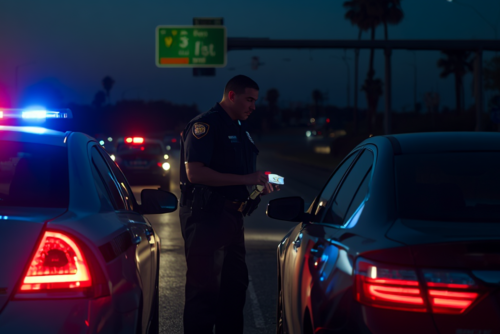
The flashing lights in your mirror change the night in an instant. A Pensacola officer walks up, asks a few questions, then asks you to blow into a device or give a sample. Many drivers do not realize they already made a promise to the State of Florida the day they first got behind the wheel.
That promise sits at the center of Florida’s implied consent law. Under Florida Statute 316.1932, anyone who drives on a Florida road is treated as having agreed in advance to chemical testing of their breath, urine, or blood after a lawful DUI arrest. The Law Office of James M. Burns helps drivers across Escambia County understand what that agreement means and how to push back when the State uses it against them.
A refusal is not a dead end, and a test result is not the same as a conviction. Knowing how implied consent works, and what it does not cover, often shapes the entire outcome of a drunk driving case in the First Judicial Circuit.
What Does Florida’s Implied Consent Law Actually Require?
Florida’s implied consent law treats the act of driving as agreement to submit to an approved breath, urine, or blood test after a lawful DUI arrest. An officer with reasonable cause may request the test, and a driver who declines faces both license and criminal consequences under state law.
The rule rests on a trade. Florida grants the privilege of driving, and in exchange every driver is treated as having agreed to testing when an officer has reasonable cause to believe they were impaired. You sign nothing, and a warning about it is printed on every Florida driver license.
Two conditions must line up before the law applies. The test has to follow a lawful arrest, and the officer must have reasonable cause to believe you were driving or in actual physical control while under the influence. If either piece is missing, the request itself may be open to challenge.
- The officer had reasonable cause to believe you were driving or in actual physical control while impaired.
- The request followed a lawful arrest for driving under the influence.
- The officer read the implied consent warning describing the consequences of refusal.
- The test was an approved breath, urine, or blood test administered under state procedures.
That structure matters because the State leans on implied consent to bring in the most damaging evidence in a DUI case. When our attorneys review a stop, we test whether each condition actually held.
Which Tests Does Implied Consent Cover: Breath, Urine, or Blood?
Implied consent covers three chemical tests. A breath test measures alcohol, a urine test detects chemical or controlled substances, and a blood test applies when breath or urine testing is impractical or impossible. Each test becomes available only after a lawful DUI arrest and carries its own procedures.
The breath test is the one most Escambia County drivers encounter. After an arrest, officers transport the driver to a station or the Escambia County Jail and use the Intoxilyzer 8000, the approved breath instrument in Florida. The reading is measured in grams of alcohol per 210 liters of breath.
Urine testing comes into play when officers suspect chemical or controlled substances rather than alcohol. Blood testing is different again. The statute allows a blood draw when a breath or urine test cannot reasonably be done, such as when an injured driver is taken to a Pensacola hospital after a crash.
- Breath test: measures alcohol content using the Intoxilyzer 8000 after a lawful arrest.
- Urine test: detects chemical substances or controlled substances at a detention facility.
- Blood test: used when breath or urine testing is impractical or impossible, often at a medical facility.
Each method has technical requirements, from observation periods to chain of custody. A break in any of them can give the defense room to challenge the result.
Is Refusing a Breath or Urine Test a Crime in Florida?
Yes. Under current Florida law, refusing a lawful breath or urine test after a DUI arrest is a second-degree misdemeanor for a first refusal and a first-degree misdemeanor for a second or later refusal. The refusal now carries criminal penalties on top of the administrative license suspension.
This is a serious shift. For years, a first refusal brought only an administrative license suspension, and the charge became criminal only on a second refusal. Florida Statute 316.1939 now makes the first refusal of a breath or urine test a criminal offense in its own right.
A second-degree misdemeanor carries up to 60 days in jail and a $500 fine. A first-degree misdemeanor, which applies to a second or later refusal, raises the exposure to up to a year in jail and a $1,000 fine. These penalties stack on top of any sentence for the underlying DUI charge.
- A first refusal of a lawful breath or urine test is a second-degree misdemeanor, punishable by up to 60 days in jail.
- A second or subsequent refusal is a first-degree misdemeanor, punishable by up to one year in jail.
- The criminal charge for refusal is separate from, and added to, any penalty for the DUI itself.
- A refusal can also be introduced as evidence at the DUI trial.
That change means the roadside decision a driver makes near Interstate 10 or Highway 98 now carries consequences in two separate courts at once.
How Long Will the DHSMV Suspend Your License for a Refusal?
A first refusal results in a one-year driver’s license suspension through the Florida Department of Highway Safety and Motor Vehicles. A second refusal, or a refusal after a prior license suspension for refusal, extends the suspension to 18 months. This administrative penalty runs separately from the criminal case.
A DUI arrest sets two machines in motion at once. The criminal case moves through the First Judicial Circuit, while the administrative suspension is handled by the FLHSMV. The suspension for refusal begins at the arrest and does not wait for a conviction.
The length turns on history. A driver refusing for the first time faces a one-year suspension. A driver who has previously lost a license for refusal, or who was fined for a prior refusal, faces 18 months.
- First refusal: a one-year administrative suspension of driving privileges.
- Second or subsequent refusal: an 18-month suspension.
- Refusal after any prior suspension for refusal: an 18-month suspension.
Losing a license reaches into work, family, and daily life across Escambia County, where public transit is limited and many residents commute along Scenic Highway and U.S. 98. That weight is why the administrative side deserves attention from day one.
How Does the 10-Day Rule Protect Your Driving Privileges?
After a DUI arrest in Florida, you have only 10 days to request a formal review hearing with the FLHSMV. Filing within that window lets you contest the suspension and seek a temporary permit. Missing the deadline makes the suspension final and far harder to undo.
The 10-day clock is the most overlooked deadline in a DUI case. It runs from the date of arrest and counts every calendar day, including weekends and holidays. Many drivers fix their attention on the court date and let the window close without acting.
Requesting the hearing does more than buy time. It forces the arresting officer to testify under oath early, which locks in their account and hands the defense valuable material for the criminal case.
- Count 10 calendar days from the arrest date, weekends and holidays included.
- Have your legal team file a formal review hearing request with the FLHSMV.
- Obtain a temporary driving permit that keeps you on the road during the challenge.
- Use the hearing to question the officer under oath and preserve their testimony.
Acting quickly through the FLHSMV Pensacola Bureau of Administrative Reviews keeps your options open on both fronts.
Can You Refuse the Roadside Portable Breath Test?
Yes. The handheld roadside breath test is voluntary, and declining it does not trigger implied consent penalties. Those penalties apply only to the official breath, urine, or blood test requested after a lawful arrest, not to the portable device officers use during the initial roadside investigation.
Drivers often confuse two very different tests. The portable breath test, or PBT, is a small handheld unit an officer may use on the side of the road to build probable cause. The evidentiary test is the Intoxilyzer 8000 back at the station after arrest.
Implied consent attaches to the second test, not the first. You can decline the roadside PBT, along with voluntary field sobriety exercises, without facing the automatic suspension that follows refusal of the official instrument.
- The roadside portable breath test is voluntary and used to develop probable cause.
- Field sobriety exercises, such as the walk-and-turn, are also voluntary.
- The official Intoxilyzer 8000 test follows arrest and is governed by implied consent.
- Refusing the official test, not the roadside PBT, triggers license and criminal penalties.
Knowing which test is which can change how a stop unfolds along Cervantes Street or near NAS Pensacola.
How Is a Test Refusal Used Against You in Court?
Florida law lets prosecutors introduce a test refusal as evidence in a criminal DUI trial. The State often argues that a driver refused because they knew they were impaired. That makes refusal a double-edged choice, and defense counsel must be ready to explain it to a jury.
Refusal does not erase the case. The statute specifically makes a refusal admissible in any criminal proceeding, and prosecutors with the State Attorney’s Office use it to suggest a guilty mind.
A skilled defense attorney can offer the jury other reasons a person might decline. Confusion, fear, a language barrier, a medical condition, or unclear instructions from the officer all give context that undercuts the State’s story.
- Show that the driver was confused or never clearly understood the request.
- Highlight medical or physical conditions that affected the encounter.
- Question whether the officer gave the required implied consent warning correctly.
- Challenge whether the arrest and the testing request were lawful in the first place.
The refusal becomes one piece of a larger picture, and how it is presented can matter as much as the refusal itself.
What Happens If You Are Unconscious or Taken to a Hospital?
Florida’s implied consent law treats an unconscious driver as not having withdrawn consent, which allows a lawful blood draw when breath or urine testing is impossible. If you arrive at a hospital after a crash, officers may request a blood test to measure alcohol or drug content.
Serious crashes change the testing picture. When a driver is taken to a Pensacola medical facility and a breath or urine test cannot reasonably be performed, the statute permits a blood test under implied consent.
The law states that a person who cannot refuse because of unconsciousness is deemed not to have withdrawn consent. Even so, the blood draw must be handled properly, by authorized personnel and in a reasonable manner.
- A blood test is allowed when breath or urine testing is impractical or impossible.
- Only authorized medical personnel may draw the blood for testing.
- An unconscious driver is treated as not having withdrawn consent.
- Improper collection or handling can make the result open to challenge.
Hospitals along the Gulf Coast handle these draws regularly, but procedure still governs, and any deviation can open the door to a motion to suppress.
How Can a Defense Attorney Challenge an Implied Consent Suspension?
A defense attorney challenges an implied consent suspension by attacking the legality of the stop and arrest, the officer’s probable cause, and whether the required warnings were given correctly. Winning the FLHSMV hearing can invalidate the suspension and weaken the criminal case at the same time.
Implied consent is not automatic proof of anything. If the traffic stop lacked a legal basis, or the arrest was not lawful, the request for testing may fall apart.
Our attorneys examine whether the officer truly had reasonable cause, whether the implied consent warning matched what the law requires, and whether testing procedures were followed. Each weak point can support a motion to suppress in the First Judicial Circuit.
- The traffic stop lacked reasonable suspicion of a violation.
- The arrest was not supported by probable cause.
- The officer misstated or omitted the required implied consent warning.
- The testing equipment or procedures did not meet state standards.
When evidence is suppressed, the State often loses the advantage it counted on, which can lead to reduced charges or a dismissal.
Talk With a Pensacola DUI Defense Attorney
A DUI arrest moves fast, and the implied consent rules can cost you your license and add criminal charges before you ever see a courtroom. Attorney James M. Burns has defended drivers across Escambia County and the Florida Panhandle for more than two decades, and he handles both the criminal case and the FLHSMV hearing.
The Law Office of James M. Burns works on a flat fee, so you know the cost from the start. If you are facing a DUI or a test refusal in Pensacola, call (850) 457-6002 or visit our office at 4502 Twin Oaks Drive, Pensacola, FL 32506 to schedule a free, confidential consultation.
Frequently Asked Questions About Florida’s Implied Consent Law
Does implied consent apply if I was never read my rights?
Implied consent is separate from Miranda warnings. Officers must give the specific implied consent warning about the consequences of refusal, which is different from the right-to-remain-silent advisory. If the implied consent warning was missing or stated incorrectly, it can become grounds to challenge the suspension.
Can I be charged with DUI even if I refused all testing?
Yes. Prosecutors can pursue a DUI charge using other evidence, such as officer observations, your driving pattern, and video. A refusal removes a chemical result but does not end the case, and the refusal itself can be used against you.
What is the difference between the administrative case and the criminal case?
The administrative case is handled by the FLHSMV and decides your driving privileges. The criminal case proceeds through the court and decides guilt and penalties. They run on separate tracks with separate deadlines, and the outcome of one does not control the other.
Will a test refusal show up on my driving record?
Yes. A refusal is recorded by the FLHSMV and appears on your driving record. It can affect insurance, future license actions, and the penalties you face if you are ever accused of refusing again.
Can an out-of-state driver be subject to Florida’s implied consent law?
Yes. Anyone driving on Florida roads is covered, including visitors and tourists. Florida reports license actions to other states, so a refusal in Pensacola can lead to consequences against your home-state license as well.